Automated Parcel Sorting Systems: How They Work, Types, Sizing and Cost
An automated parcel sorting system reads each parcel and sends it to the right destination — a route, a carrier, a ZIP or a delivery unit — without people sorting by hand. This guide explains how the systems work, compares the main sorter types, and shows how to size one and what drives the cost. It is written for the people who actually have to choose one — including delivery stations and last-mile operators sizing a system around a fixed morning sort window.
How an Automated Parcel Sorting System Works
Induction
Parcels are placed on the sorter one at a time — by hand at an induction station, or automatically from a conveyor. Induction speed often sets the real throughput, so it matters as much as the sorter itself.
Identification
Scanners read the label: barcodes, and on some systems printed text. Reading more sides of the parcel means fewer parcels need to be turned label-up by hand.
Diversion
A mechanism — a belt, tray, shoe, wheel, arm or robot — moves each parcel off the line at its destination chute, bag or cage.
Software
Sort plans map each label to a destination: a delivery route, a carrier, a 5-digit ZIP or a USPS delivery unit. Changing the plan should not mean changing the hardware.
Types of Parcel Sortation Systems
Throughput, footprint and price vary widely by manufacturer and configuration. Ask each vendor for rated parcels per hour, measured accuracy and the documents behind both. A deeper comparison: vertical vs flat sorter layouts.
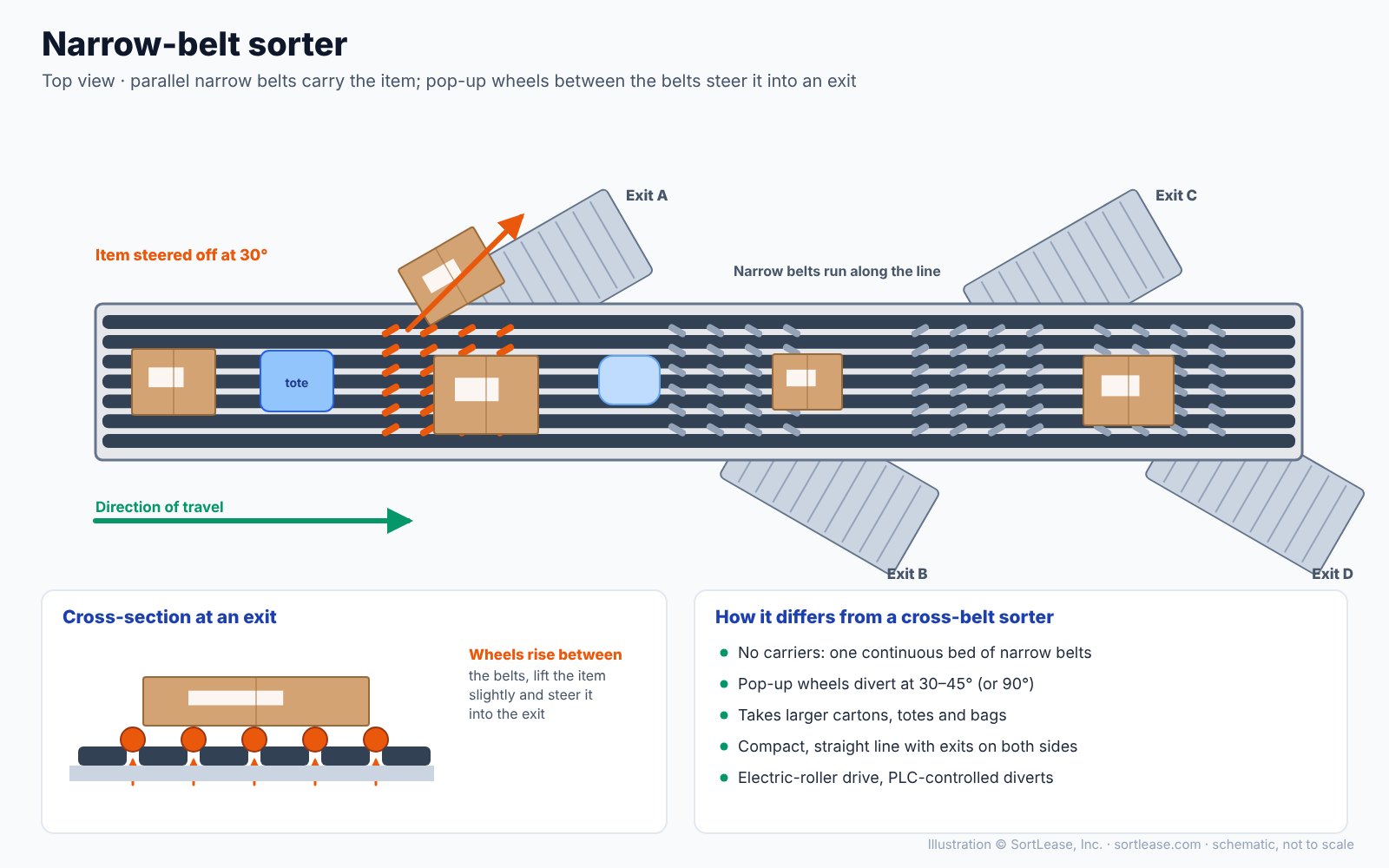
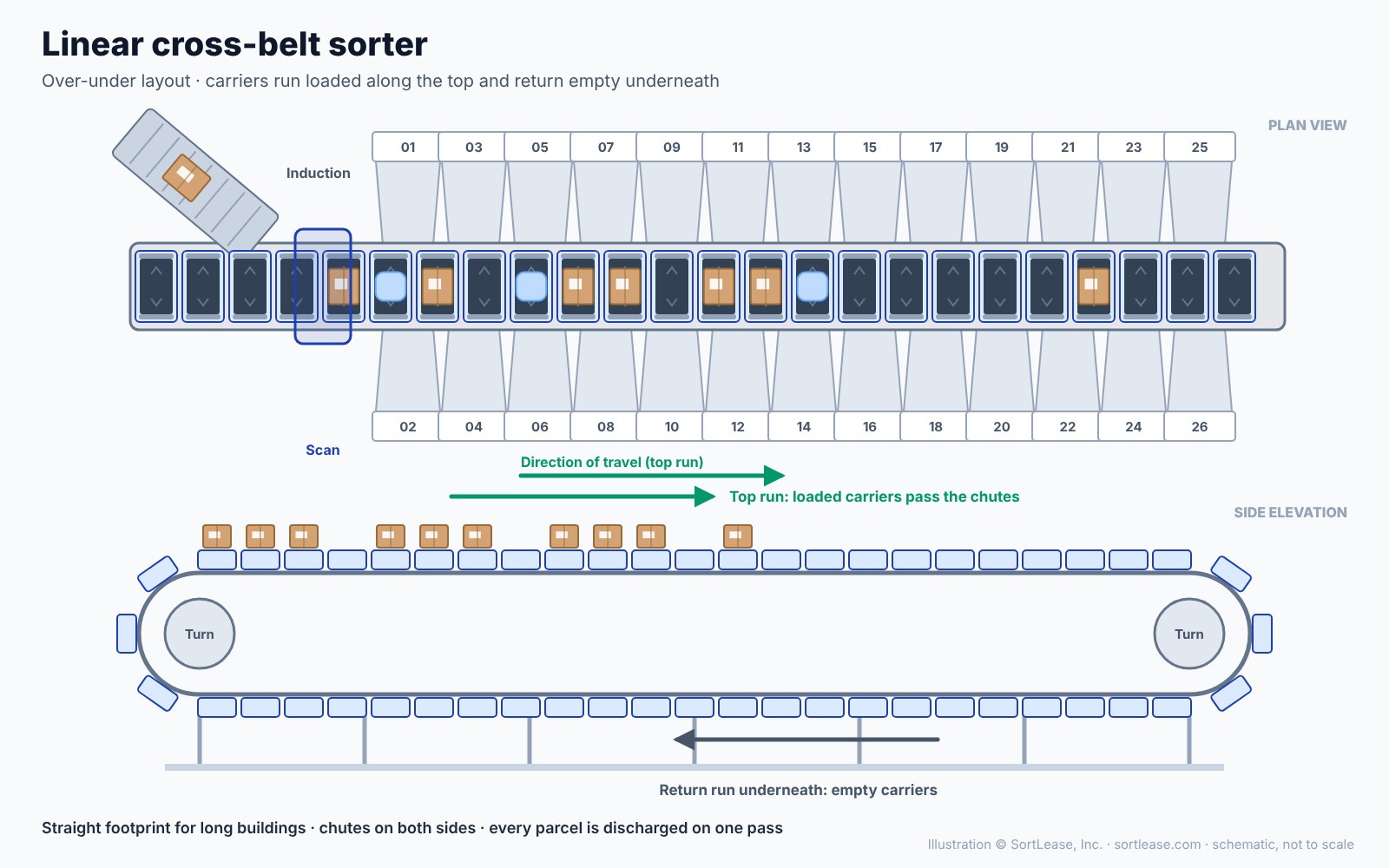
Video: A Linear Narrow-Belt Sorter in Operation
A long belt line carries parcels from induction through the scanning tunnel. Each parcel is read, matched to a destination in the sort plan and diverted into the chute and cage for that destination — a route, a ZIP or a carrier. The layout suits long, narrow buildings with many destinations along both sides.
Footage: an automated sorting installation. SortLease designs, installs and maintains sorting systems like this for US facilities — engineered around your volumes, parcel mix and floor space.
SortLease supplies its own SortLease systems and also sources equipment from qualified manufacturers, so each site gets the sorter that fits it.
- Pay per parcel: SortLease installs, runs and maintains it, from $0.10 per parcel, with no equipment to buy.
- Or buy it: purchase is quoted per configuration.
- Not sure which layout fits? A linear line needs length; a vertical SortLease S15 fits tight sites.
How to Size a Parcel Sorter
Start from your sort window, not your daily total. A sorter has to clear the peak inside the time you have before trucks or drivers leave.
- Peak parcels per hour = parcels in the busiest sort ÷ hours in that sort window.
- Destinations = routes, carriers, ZIPs or delivery units you split into.
- Parcel range = smallest and largest, lightest and heaviest items you handle.
- Space = floor area, clear ceiling height and dock positions.
Example
A station sorts 10,000 parcels between 4:00 and 6:30 a.m. — 2.5 hours. That's 4,000 parcels per hour, plus headroom for peak days.
At 3,600 parcels per hour per SortLease line or tier, two tiers (7,200/hour) cover it with room for growth. Stacked vertically, they share one footprint.
Example numbers only. Use your own volume and window.
Sizing for a delivery station (last-mile)
Delivery stations size differently from warehouses, in three ways:
- The window is fixed and short. Drivers leave at a set time, so the sorter must clear the peak inside a 2–3 hour morning window. Size for the peak hour inside that window, not the daily average.
- Destinations are driver routes. A 50-route station needs about 50 outlets, one per route, so each driver loads straight from their own chute. Count routes first, then check the sorter supports that many destinations.
- The stream is mixed. Small polybags and bulky boxes arrive together. Check the sorter’s minimum and maximum parcel range against your bulkiest regular items, not just your average parcel.
Worked example: our Palm Springs deployment is configured for 50 driver routes at 3,600 parcels per hour. To run your own numbers, use the sorting cost calculator.
What Drives the Cost of a Parcel Sorting System
Throughput
Higher rated parcels per hour usually means more machine, more induction stations and more conveyor.
Destinations
Each chute, bag or cage position adds hardware and floor space.
Integration
Connecting to your label data, WMS or carrier files takes software work — confirm who does it and what it costs.
Installation
Site preparation, power, freight and commissioning. Ask for an installation timeline in writing.
Running cost
Energy, operators, maintenance and spare parts over the life of the system — not just the purchase price.
Labor today
The cost you're replacing. Our sorting cost calculator works out your manual cost per parcel.
Buy a Sorter or Pay per Parcel?
Pay per parcel
SortLease installs, runs and maintains the sorter; you pay for parcels sorted, from $0.10 per parcel, billed monthly. No equipment to buy, and the system is removable. Fits operations that want to test automation or whose contracts may change.
Buy
You own the system; purchase is quoted per configuration. Fits operations with stable, long-term volume at one site that want to own the asset.
Example: a station sorting 8,000 parcels a day at the from-$0.10 rate pays about $800 per operating day — roughly $20,800 a month at 26 operating days — with no equipment to buy, insure or maintain. Example only, at the starting rate; your rate depends on volume and configuration.
Not sure automation pays at your volume? Read manual vs automated parcel sorting — sometimes sorting by hand is still cheaper.
The SortLease S15 Automated Parcel Sorter
- 3,600 parcels per hour per line or tier; up to six tiers stacked vertically (21,600 per hour)
- 99.99% rated sorting accuracy (manufacturer specification)
- Optical reading of barcodes and text on up to five sides
- Arm-type diverter; manual or automatic induction
- Sorts by route, carrier or mixed sort plans
- Typically two operators; installation in 2–4 weeks
- About 40% less energy than a cross-belt sorter (manufacturer data)
Built per site
Every system is configured for the site: stacked vertically where floor space is tight, or laid out flat across docks. Tell us your daily volume, sort window and floor plan and we'll recommend a configuration.
In the field: Palm Springs, California
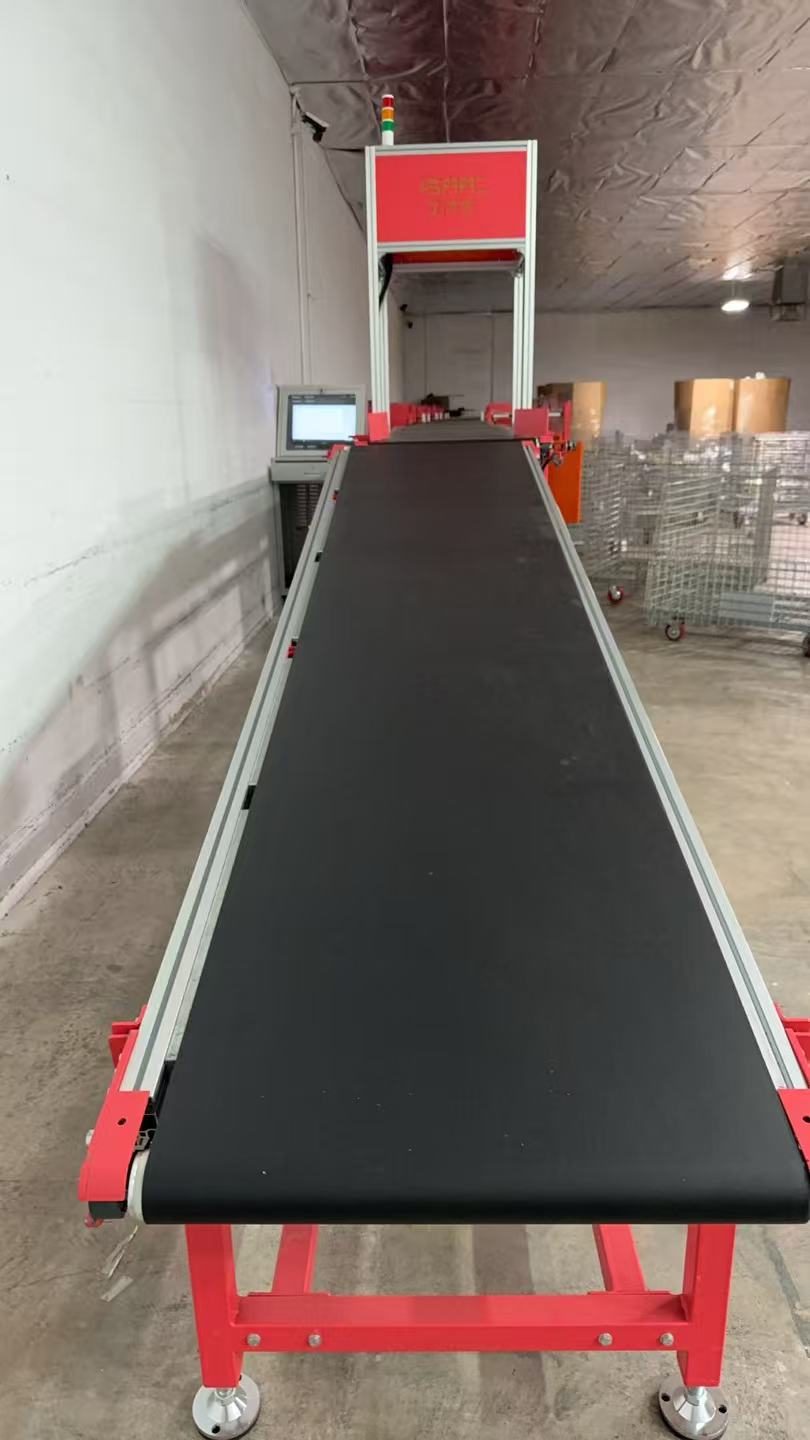
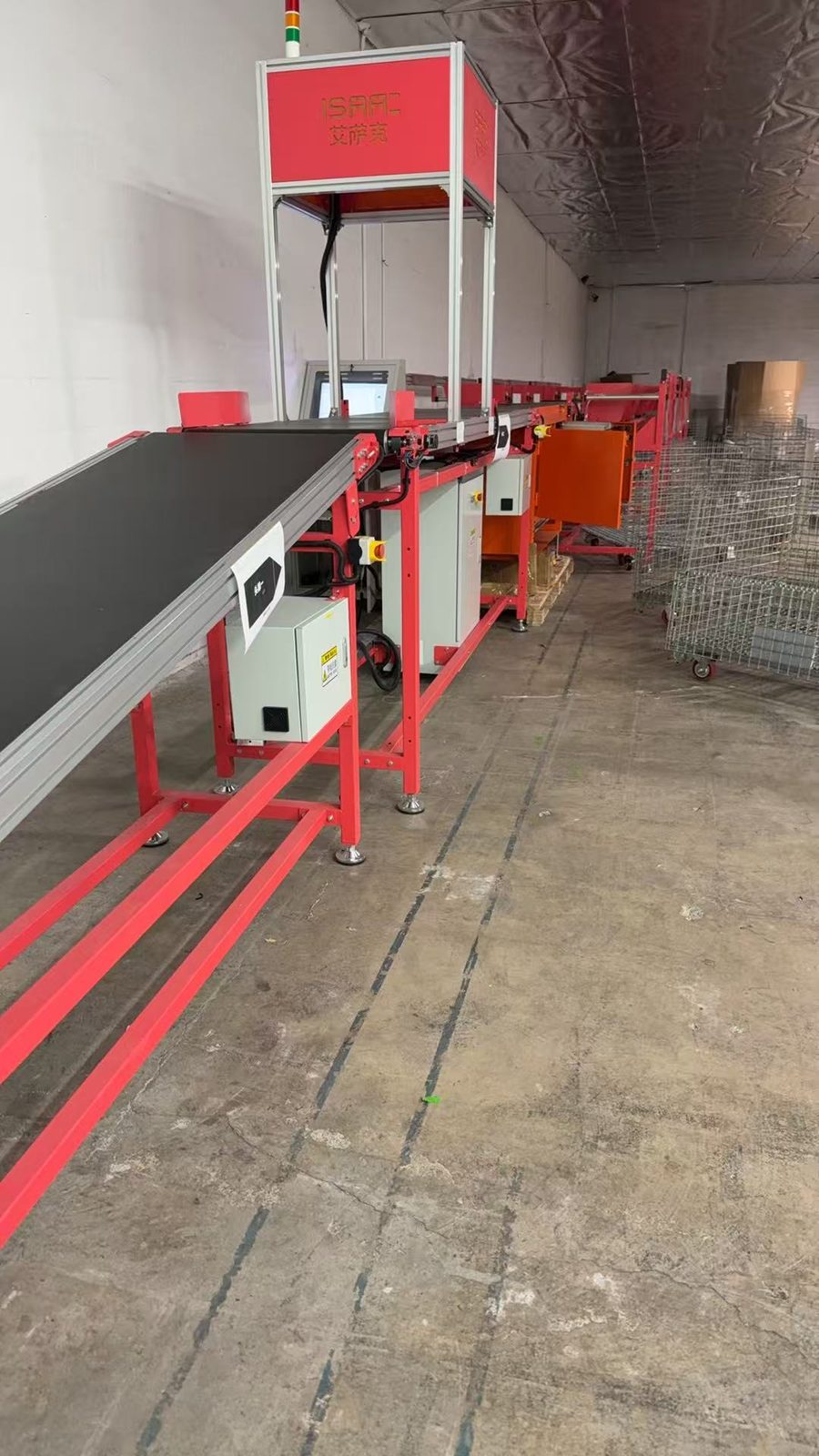
The first S15 line was installed in October 2026 at a working delivery station in Palm Springs, California — configured for 50 driver routes at 3,600 parcels per hour, and deployed along the wall so the floor stays clear for staging. See the full story on the Palm Springs deployment page.
Questions to Ask Any Sorter Vendor
- What is the rated throughput, and at what induction rate was it measured?
- What accuracy has been measured, and can I see the test document?
- What parcel sizes and weights does it handle, and what happens to items outside that range?
- How many sides of the parcel can the scanners read?
- How many operators does it need at full speed?
- How are sort plans changed — by my team, or by the vendor?
- What are the installation timeline, power and floor requirements?
- Who maintains it, how fast is service, and what are the running costs?
- Can capacity be added later without replacing the system?
Automated Parcel Sorting: Common Questions
What is an automated parcel sorting system?
A machine that reads each parcel's label and sends it to the right destination — a route, carrier, ZIP or delivery unit — without people sorting by hand. It combines induction, identification (scanners), diversion and sort-plan software.
What are the main types of parcel sortation systems?
Common types are cross-belt, tilt-tray, sliding-shoe, pop-up wheel or narrow-belt, pusher or arm diverters, bomb-bay and robotic systems. They differ in how they divert parcels, what sizes they handle and how much space they need.
How do I size a parcel sorter?
Divide the parcels in your busiest sort by the hours in that sort window to get peak parcels per hour, then add headroom. Also count destinations, note your smallest and largest parcels, and measure floor area and ceiling height.
How much does an automated parcel sorting system cost?
It depends on throughput, number of destinations, integration and installation. With SortLease you can pay per parcel from $0.10 with no equipment to buy, or purchase a SortLease S15 quoted per configuration.
How fast is the SortLease S15?
It is rated at 3,600 parcels per hour per line or tier, and up to six tiers can be stacked for 21,600 parcels per hour.
How accurate is automated parcel sorting?
Accuracy depends on the scanners, label quality and induction. The SortLease S15 has a manufacturer-rated sorting accuracy of 99.99%; ask any vendor for the test document behind its number.
How long does installation take?
A SortLease S15 typically installs in 2–4 weeks, depending on the site.
Is automated sorting worth it for a small station?
It depends on your volume and labor cost. Work out your manual cost per parcel first; at low volumes, sorting by hand can still be cheaper.
Size a sorter for your site
Send your daily volume, sort window and floor plan. We reply within 24 hours with a recommended configuration.